Monday, May 11, 2009

Ford F150 Truck As Best Pickup Truck

There is always much debate amongst Ford trucks and Chevrolet truck enthusiasts as to which is the better truck. Sure, there are many ways to compare the Chevy Silverado truck and the Ford F150 truck, including their specs, the interior styling and comfort, exterior styling and features, fuel economy, pricing, horsepower and torque, and reliability and longevity.

In many ways the Chevy Silverado and Ford F150 are very similar, including their horsepower, and towing capacity, though there is video proof of a Silverado out pulling an F150 in a tug of war. But the general idea is that the performance characteristics of these two pickup trucks are pretty much identical.

If you look at the exterior styling of the Chevy Silverado, it has more angular lines than the Ford F150, which has a softer curved style to it. Again this comes down to the Chevy vs Ford guy/gal. As for the interior styling, well, they're pickup trucks, so they're not going to be very different in terms of seating, instrumentation and sound and air conditioning, etc. So again it comes down to whether you are Chevy fan or a Ford fan.

Surprise, fuel economy is basically identical between the Chevy Silverado and the Ford F150 as well. Yet another spec category that can't be decided by any other reason than brand preference. Do you see a pattern here? What about reliability and longevity? That one is again difficult to quantify, as there are always stories of the million mile Chevy Silverado and the Ford F Series floating around. My tendency would be to favor the Silverado slightly in this category, however there just isn't enough proof on either side to come to a definitive conclusion.

So if the Silverado and the Ford F150 are pretty much identical, how can you determine which one is better? There is only one real factor that can determine which truck is better: the North American consumer! So right now, all the Ford fans are cheering and slapping themselves on the back for having the best pickup truck, given that the Ford F150 sold 515,513 units in 2008 compared to the Chevy Silverado at 465,065 units sold. So it looks rosy for the F150, however if you consider the fact that the GMC trucks Sierra is just a Chevy Silverado rebranded under the GMC nameplate, total sales of Chevy Silverado come out on top at 633,609 units sold.

This makes the Chevy Silverado the eternally disputed king of trucks.

Saturday, May 9, 2009

Buying Guidelines For Komatsu Bulldozer

Komatsu Bulldozers are the ultimate tool for heavy construction machinery and it is very useful for demolition work. With their unbeatable traction on every imaginable surface, bulldozers are great for moving unwanted materials, grading, or knocking down buildings. You can get abulldozer in a wide variety of sizes for whatever job you have in mind. As little as 40, or as many as 400 horses are available. This range of power should be sufficient for the smallest budget, up to the largest job. Bulldozers combine strength with agility and versatility. Their track drive systems, combined with an evenly distributed weight design allow dozers to go wherever their needed, and take their power with them.

Size and power is not everything, when it comes to getting the right dozer for your job. Buying a dozer that's too big to get around your job site is not a good idea either. Blade size and type are important factors to consider when making your purchase decision. Clearing debris, grading roads, and knocking down derelict buildings are different jobs that require different blades.


Choosing the correct brand of dozer can be a challenge as well. There are several good bulldozer manufacturers to consider, such as Komatsu construction equipments, Caterpillar, New Holland, Rayco, John Deere, Liebherr, and Case. Each of these makers have several models worth considering.

For smaller horsepower jobs, New Holland has the D75, D85, and D95 dozers that range from 75 to 95 horsepower. Komatsu D31EX/PX-21, D39EX/PX-21m and D37EX/PX-21 come with some nice electronic controls. The ever popular Caterpillar are always good machines to consider, especially the D89T, and the D2 models.


Source: Bulldozers For Sale

Tuesday, April 28, 2009

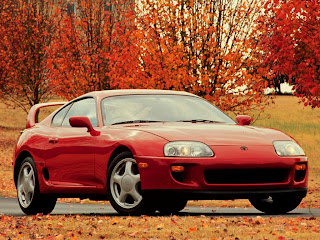
Evaluation On Toyota Supra Cars


The Toyota Supra was one of Toyota's most popular sporting cars that gained many, many fans and spawned many racing enthusiasts and Supra lovers all over the world. The Mark I is the first generation of the car and ran from 1979 to 1981. The Supra was derived from the Toyota Celica, and was then known as the Toyota Celica Supra until its third generation, then the Celica was dropped and it was essentially its own car. The assembly of this masterpiece was done strictly in Japan, and the body style consists of 2+2 fastback GT coupe car format. The look of the Mark I was longer and wider when compared to the Celica, and the engine of the first four generations can trace their direct engine roots to the Toyota 2000GT.

The overall dimensions of the car with wheelbase at 2628.9mm, a length of 4615.2mm, a width of 1651mm, a height of 1290.3mm and a curb weight of 2800lbs, where there were subtle variations as the years rolled on. The first year of production of the Supra, named the Toyota Celica XX, saw the car having all modern conveniences of the period of power windows and locks, cruise control, arm rests, tilt steering wheel, deep zippered pockets, a tonneau cover, AM/FM/MPX 4 speaker radio, analog clock and tachometer. The engine was completely changed from the four cylinder of the Celica to the Inline 6, and the first year saw two engines on different sides of the pond; 2.6 litre 12 valve SOHC inline 6 engine. and the 2.0 litre 12 valve SOHC inline 6 engine (M-EU) that both out putted 110hp 184 Nm. They were the first Toyota engines to have electronic fuel injection. They also had either a four speed automatic or a five speed manual transmission with overdrive gear.

The solid rear axle configuration was kept from the Celica, which had optional limited slip differential. The car has standard four wheel disc brakes, which suspension that consists of MacPherson Struts and stabilizer bar at the front, and four link suspension with coil springs, stabilizer bar, and lateral track bar at the back. In 1980, the changes that occurred to the car was a increase performance engine of 2.0 litre 12 valve SOHC Turbocharged inline 6 engine that delivered 145hp, and a torque of 211 Nm. It was the first Toyota engine to have a turbocharger, and it was outfitted with a Garrett T03 Turbo, but was not intercooled. There were also a few aesthetic changes like the addition of mudflaps with "Celica" on them, redesigned side mirrors, bigger aluminum rims, leather trimmed seating, and climate control.

In 1981, the final year of the Mark I, there was a massive engine upgrade with a 2.8 litre 12 valve SOHC engine but achieves 116hp, and a torque of 197Nm. The automatic transmission was also revamped as the Toyota A43D, as it attained a final drive setting. The change of the Mark I saw the Supra achieve acceleration from 0-60mph 10.24 seconds and the quarter mile in 17.5 seconds. It was a highly impressive performance at the time, and it was considered a supercar for the road. The last big addition was the sports package that offered raised white letter tyres, sport suspension, back and front spoilers, and the first introduction of the 8-track cartridge in any Supra.

Source: Toyota Supra Mark I

Tuesday, April 21, 2009

Keep Safe Your Old Car By Car Insurance

People who own antique cars are generally passionate about them; nevertheless, not one owner would ever consider failing to insure their car. Although you might think it hard to obtain, it is surprising how many companies can actually supply antique car insurance. Of course, with so many classic car insurers available, an owner should not have a problem insuring their prized possession; they are also more likely to get the policy at a competitive price.

Mainstream auto insurers are also now able to provide this type of insurance for antique cars; often called collectors auto insurance, these plans meet the exact requirements of the vehicle to be protected. Perhaps more so than a modern car, these policies need to be more precise and an insurance representative will require as much information about the car before he can supply a tailor made quote. Your level of cover will depend on how much you can afford but it is possible to lower this by arranging for your deductible to be raised above the minimum set by the insurer.


It is important to know that the company you are insuring your antique car with is reliable; companies like this are usually well established with a good reputation. These large companies are also able to insure your modern car at the same time and may even have a discount scheme for multiple policies. The security of having an established company provide antique car insurance for an old car is well worth the premium they will charge.

Whilst cost is an issue you may find the specialist auto insurers that exist may be less expensive; the downside is you may have to use a standard auto insurer for any other car. With the number of classic cars still around you will not be surprised to learn that even the insurers have, in some areas, specialized even further to provide cover for only one type of car. To be on the safe side it is best to check out any insurance companies, especially the smaller ones so you can be happy in the knowledge that your premium money and antique car are not at risk.

No-one wants to find that after paying the insurance premiums for months the company will not or is unable to pay out on an insurance claim. It can be a lengthy process finding a reliable antique car insurance provider; nevertheless, it is far better to spend a little time doing this than not having the car insured at all. Most classic race car are worth many thousands of dollars and that is a big loss if the car is ever stolen or destroyed so having auto cover may be the most valuable protection you ever purchase.

Source: How To Insure Muscle And Classic Cars

Thursday, April 16, 2009

Difference Between Classic car And Vintage Car

It is not always easy to determine if a vehicle is considered to be a vintage car or a classic car one. The definitions seem to be changing all the time. A vintage car is usually considered to be any that was built from 1919 to 1930. However, the classic car seems to have crossed into the vintage, at least according to some experts. This can make defining the two tricky. Sometimes knowing the two are different is simply not enough information. If you have an older car and you need facts, you will want to do your homework.


The reason most people need to define their car as classic or vintage is for insurance purposes. You should always have insurance coverage on your vehicle. If anything were to happen to it you would otherwise have to pay for it out of your own pocket. And that's a chance that should never be taken with any old cars. Many insurance companies have a rule that the car must be at least 25 years old or older to be considered a classic. If the car is older than the 1930s it will likely be considered vintage. Of course some agencies even have a historical status for vehicles of certain ages so be sure to inquire fully.

Currently it seems that there is no concrete definition of a classic car. To some it is an old hotrod from the 1950s and for others it is the muscle cars of the 1970s. This term gets a little sticky because the definition seems to change with every person asked.

According to the Classic Car Club of America a classic automobile is any one that has been built between the years of 1925 and 1948. This is an indication of how drastically different the opinions are from resource to resource. That definition does apply to cars that were either domestic or foreign built. If you check out the club's website and find a car missing from their classic list that you feel should be there, you can actually petition the site to add it to their list. It doesn't mean that they will but it's certainly worth a try.

You will likely find that different organizations or car clubs will have their own definitions of Exotic sports car and classic cars. Many different factors affect these choices too such as the popularity of the car then and now as well as the make, model and historical value. For instance, models of vehicles that appeared on TV or in movies tend to have a higher ranking classic status than those that did not.

The rarity of the vehicle also may play a role in if it is classic or vintage. A car that is exceptionally rare will likely have a higher numerical value attached to it. This can affect what category it falls into. Do not stop searching for definitions at just one source. Compare and contrast them, form your own definition if need be based on what you find. A professional opinion is recommended for extremely valuable or rare vehicles.

Source:- The Difference Between Classic And Vintage Cars

Friday, April 10, 2009

Used Cars for Sale by Owner

Used cars for sale by owner is a term that comes up on the mind of every person that’s in the market looking for his or her next car. The perception is that for cars for sale by owner is always a money saver. This assumption would be very true if the right research is done, and on the contradictory this statement may be your worst enemy, and my lead the car may end up costing you a whole lot more if the homework was to be ignored. Hence, there are some dealers and individuals that have no sympathy for negligent shoppers when it comes to the aftermath of selling a car.

We will focus this article on used cars for sale by owners, and will dedicate a whole chapter of tips and hints to smart shopping at dealerships. Hence, private sellers don’t have to pay employees, lot rental and all the other costs associated with running a car dealership. This allows used cars for sale by owner to cost less than an identical car at a dealership.


When approaching private sellers you should always think that just like you are looking for your best interest they are too. So, in other words, it doesn’t hurt to ask questions, but you should always use the services provided to public to double check the information provided. Carfax is a report that provides you with information pertaining to accidents that car have been in, and major mechanical problems were fixed. Furthermore, the best advise I can give you is hat have the seller provide you with a report from a brand name mechanical shop, stating the car conditions. And based on the report, you could then associate the car with one of three conditions, fair, good, or excellent. Once you have decided the condition of the car, you could then visit yugo for a very accurate fair market listing.

Used cars for sale by owners is start with your local newspapers, get an idea of what’s out there, then browse some trade magazines, and last but not least with the power of the internet. Keep in mind that all mentioned methods charge to list a car, and the more they list the larger their profit going to be. Browse the internet for websites that do not charge money to list the cars, and better yet, look for those that provide free consultation and tips to the buyers. The way these types of websites operate allows them to profit from buyers visiting their site, as appose to sellers listing their cars.

Last but not least, keep in mind that asking price does not equal the final out of pocket value. After buying the car, you would have to pay tax license registration and most importantly initial preventive maintenance. Each of the factors will be discussed in details in articles that are dedicated to it.

On a concluding note, Local used car for sale by owner is a term that could be your best dream, or worst nightmare. It all depends on your level of awareness of the cars’ history, and the amount of basic research you do.

Source:
Local Used Cars for Sale by Owner

Monday, March 30, 2009

Advantages And Disadvantages Of Used Cars

There are both advantages and disadvantages involved in buying used cars. It all depends on the person’s capability to negotiate, his knowledge on buying a particular make or model of the used car and the sources from which he can buy the used car. The preference, affordability and needs of the car purchaser also matter a lot.

Major Advantages of Used cars

Many people buy cheap used cars just for the reason that they can afford to buy one. As any brand new car loses value on depreciation as soon as it hits the roads, so it is possible to get a low mile run used cars for a very less amount compared to its new counterpart. Also it is possible to get the dream car of the purchaser with all the necessary features at a very low price provided the purchaser has to be patient and look for the car of his choice from various sources. It is possible for the purchase to buy a used car even up to half the price of purchasing a new car.

There is a wide range of models, brands and colors available for the purchaser to buying used car. Good quality cars are available when purchasing an off leased used car as they are maintained very well, handled by a single person and are available with an impeccable look with all the built in features. Also, nowadays it is possible to even transfer the factory warranty of the car from the previous owner in case the car is within the warranty period.


Major Disadvantages of Used cars

The interest rate on the purchase of the car matters a lot. In the case of buying used cars the interest rates are a bit higher than on the new cars as it involves more risk for the lender while giving loans on used cars. Also there are zero percent loans and financing readily available more for new cars than for the used cars.

There is no guarantee or assurance offered to the purchaser when buying a used car as to whether the car is in good condition or with the right mileage. Also there is no guarantee that the car is maintained properly and is free from any kind of accidents. There may be problems in the engine of the car or with the transmission which can be far from the sight of the purchaser of the used car. Sometimes the purchaser may end up spending more money on the maintenance of the used car than he would have spent on a brand new car. In such cases the purchaser loses his peace of mind with the never ending problems caused by the car.

When buying used cars, the purchaser needs to be very knowledgeable about the car itself. He should thoroughly go through the car’s history, maintenance records, terms and conditions, paperwork etc. If not, the purchaser may end up with great problem which may last for ever.


Article Source: Used Cars: Advantages and Disadvantages